Like many other countries in the African region, Ghana is experiencing a nutrition transition. While food availability has increased in the region over the past several decades, dietary diversity has worsened, with consumption of unhealthy fried foods and sweetened beverages becoming increasingly prevalent. As convenience foods and imported, pre-packaged energy-dense food and beverage products replace traditional, mostly plant-based diets, non-communicable disease (NCDs) are becoming a growing concern. In 2016, the World Health Organization estimated that 43% of deaths in Ghana could be attributed to NCDs, up from 28% in 1990. Of particular concern is hypertension, which is estimated to impact more than one in four Ghanaians and is among the top three risk factors driving poor health and mortality outcomes in the country. At the same time, malnutrition remains the risk factor responsible for the most death and disability in Ghana. One in five children are stunted and one in ten wasted, while a significant portion of women of reproductive age are vitamin deficient. Proactive action is needed to disrupt this double burden of malnutrition and improve diet and health outcomes in Ghana.
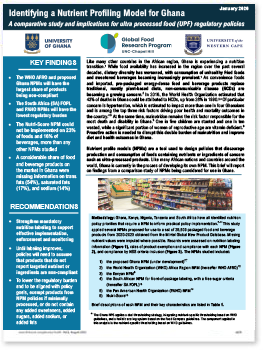
Nutrient profile models (NPMs) are a tool used to design policies that discourage production and consumption of foods containing nutrients or ingredients of concern such as ultra-processed products. Like many African nations and countries around the world, Ghana is currently in the process of developing its own NPM. This research brief will report on findings from a comparison study of NPMs being considered for use in Ghana.