A realization during her first nutrition course changed the direction of Regina Brown’s career. After beginning college on a pre-med track, she quickly saw that nutrition could offer a powerful way to influence health not only for individuals, but across entire populations. That insight set her on a path through food and nutrition policy research and now to the Department of Nutrition at UNC-Chapel Hill’s Gillings School of Global Public Health, where she joins the Global Food Research Program (GFRP) under the advisement of Dr. Shu Wen Ng.
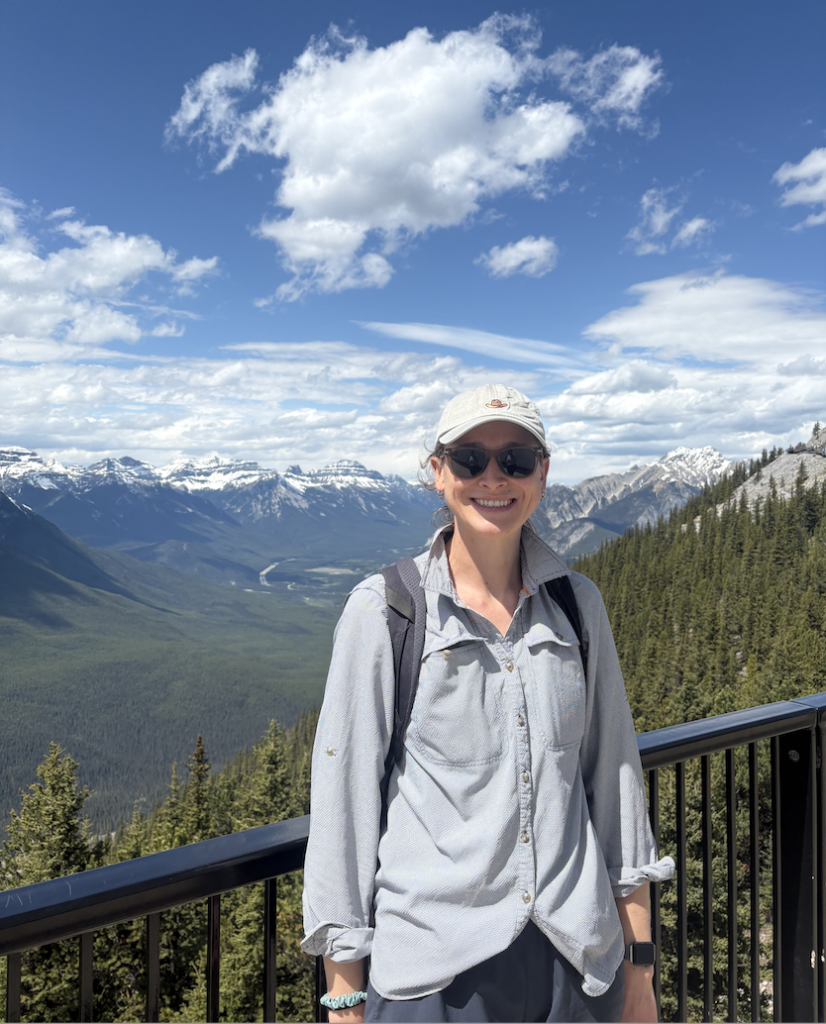
Originally from Pittsburgh, Pennsylvania, Regina most recently lived in Boston, Massachusetts, before moving to Chapel Hill. Regina earned her Master of Science and Master of Public Health degrees from Tufts University with a focus in food and nutrition policy. During her time at Tufts, she worked on a range of projects related to nutrition programs and policy, including Supplemental Nutrition Assistance Program (SNAP) and Special Supplemental Nutrition Program for Women, Infants, and Children (WIC) implementation and advocacy for healthier school meals.
After graduating, she continued her work at Tufts through several research projects. With the Jordan Nutrition Innovation Lab, she helped evaluate a health and nutrition intervention for pregnant and lactating women in Jordan. At the Food Systems for Nutrition Innovation Lab, she contributed to the design of an impact evaluation examining interventions aimed at food businesses in Feed the Future target countries.
At UNC-Chapel Hill, Regina is interested in expanding her research into consumer-facing policies that can encourage healthier dietary patterns, including front-of-package labeling and food taxes. The area is relatively unexplored territory for her, offering an opportunity to build on her previous work in nutrition policy while exploring a different point of connection between policy and individual behavior.
“I’ve worked across a range of nutrition policies and programs, both domestically and internationally, and I wasn’t ready to choose just one avenue to pursue during my PhD,” Brown said. “I’m excited to explore consumer-facing policies and learn more about how they can support healthier dietary patterns.”
Regina was drawn to GFRP and Dr. Ng because of the breadth of the team’s research across both topics and regions. Having already worked on nutrition policy and programs in the United States and internationally, she valued the opportunity to continue exploring diverse food policy questions rather than limiting her doctoral research to a single setting or approach.
Looking ahead, Regina hopes her research will remain closely connected to policy, and that her work will contribute to research that is useful to policymakers as they design and refine approaches to improving population health.
“I’m hopeful that my work at GFRP and beyond will be grounded in real-world policy needs and produce evidence that will help inform and support both future and existing nutrition policies to ultimately create healthier food environments globally,” Brown said.
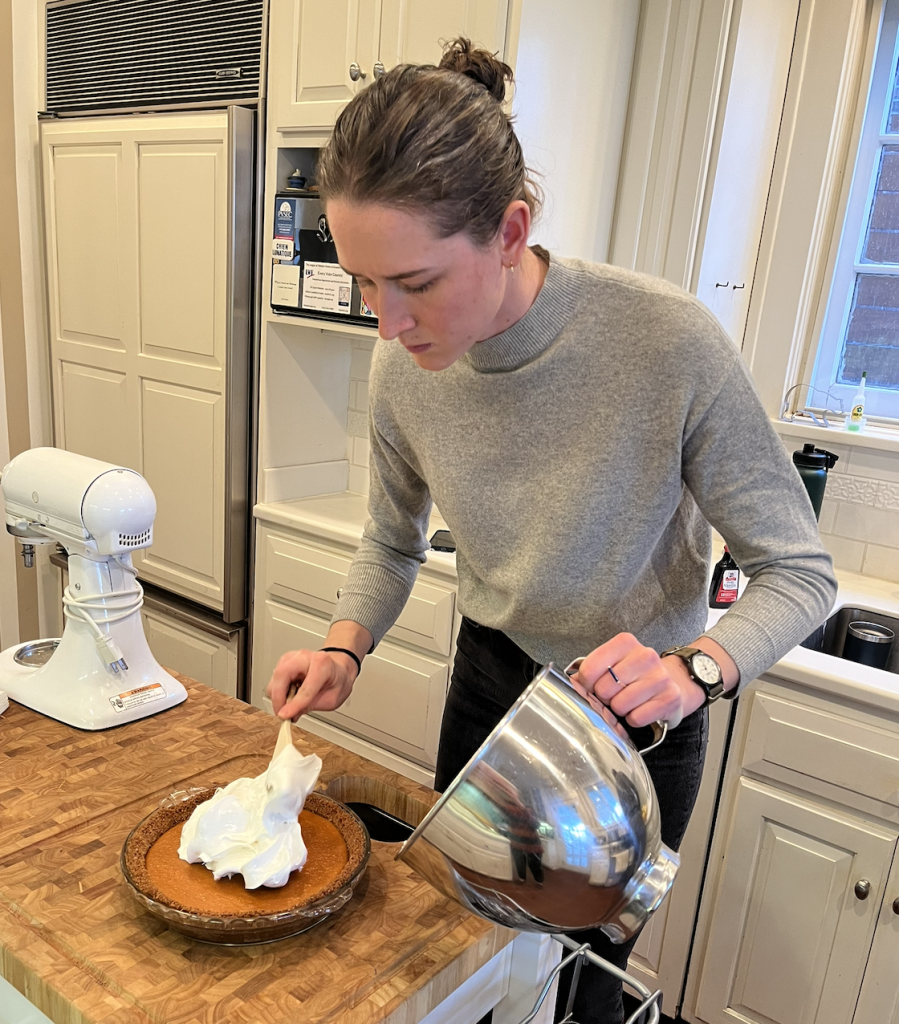
Outside of research, Regina spends much of her time outdoors trail running and playing tennis. She also enjoys baking, cooking, needlepoint, and playing the violin. She moved to Chapel Hill without any pets but is hoping to adopt a four-legged family member soon. She is settling into North Carolina life while adjusting to one of its biggest surprises for a New England transplant: the heat. She is especially looking forward to spending more time outdoors and enjoying the state’s running trails — and, perhaps most of all, its mild winters.