For Saiful Islam, nutrition has always been about more than what ends up on an individual’s plate. Growing up in Bangladesh and later building a career in public health nutrition, he became increasingly interested in how food environments, economic conditions, climate, and policy shape what food individuals have access to and, ultimately, their health. This broader perspective now brings him to the Department of Nutrition at UNC-Chapel Hill’s Gillings School of Global Public Health, where he joins the Global Food Research Program (GFRP) as a doctoral student under the advisement of Dr. Lindsey Smith Taillie.
Born and raised in Bangladesh, Saiful completed both his Bachelor of Science and Master of Science in Nutrition and Food Science at the University of Dhaka. His interest in the field developed during his undergraduate studies as he began to look beyond individual dietary choices and consider the broader systems that influence nutrition and health.
“Over time, I became increasingly interested in the factors that shape what people are able to eat,” said Islam. “Food environments, poverty, climate, policy, and the broader food system all play a role in determining dietary patterns and health.”
That systems-level perspective has shaped his academic and professional career. Before coming to UNC-Chapel Hill, Saiful was a faculty member at the Institute of Nutrition and Food Science at the University of Dhaka, where he taught and conducted research. He also completed a Master of Science in Implementation and Improvement Science at King’s College London as a Commonwealth Shared Scholar and a Master of Science in Nutrition at Cornell University as a Fulbright Scholar.
His research experience spans several areas of public health nutrition, including nutritional and dietary assessment, food composition analysis, and food environments. He has also collaborated with international development and research organizations on nutrition and food-system projects in Bangladesh.
At UNC-Chapel Hill, Saiful plans to investigate how changes in food systems and food environments influence dietary patterns and cardiometabolic health, with a focus on the intersection of climate change, diet, and chronic disease. His experiences in Bangladesh have given him firsthand insight into how climate-related changes can affect food availability, affordability, and livelihoods and, ultimately, what people eat.
“I’m especially interested in understanding how climate change and changes in food systems can shape dietary patterns and cardiometabolic health,” he said. “I hope to build the methodological skills to better understand these relationships and generate evidence that can inform effective policies and interventions.”
Saiful was drawn to GFRP’s combination of rigorous research and a strong emphasis on translating evidence into real-world policy impact. He was particularly excited about the opportunity to work with Dr. Taillie, while also valuing the program’s interdisciplinary approach to nutrition, epidemiology, policy, and food systems.
Looking ahead, Saiful hopes his research can help translate scientific evidence into policies that make healthy and sustainable diets more accessible. He is interested in generating evidence that can inform food and nutrition policies in low- and middle-income countries, where climate change, food insecurity, undernutrition, and rising rates of obesity and cardiometabolic disease increasingly intersect.
“Ultimately, I hope my research can help policymakers better understand these interconnected challenges and identify practical ways to build healthier and more resilient food systems,” said Islam.

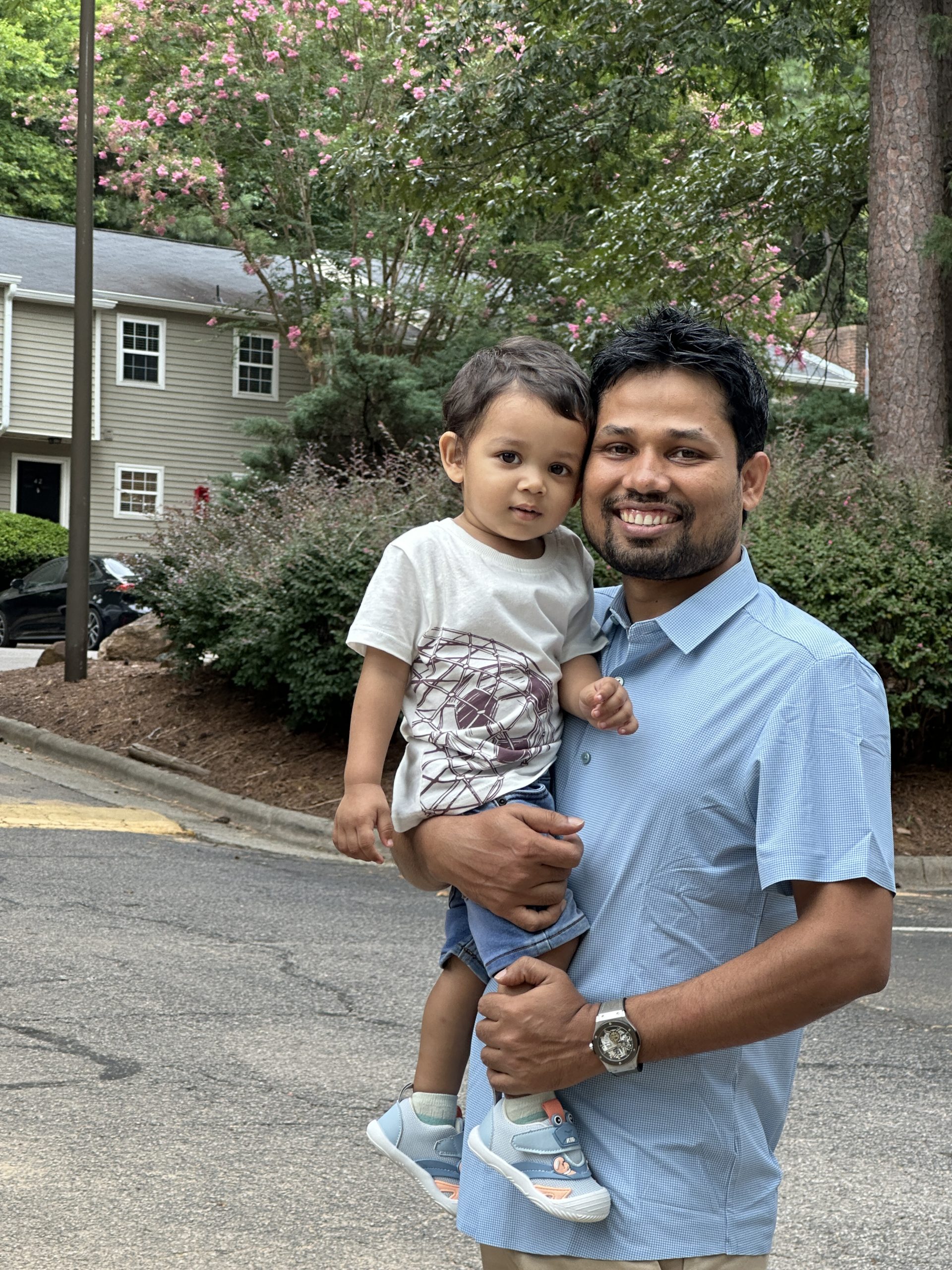
Outside of research, Saiful enjoys spending time with his family and traveling and exploring new places. After previously living in the United States while studying at Cornell University, he is excited to return and begin a new chapter in North Carolina. He recently moved to Chapel Hill with his wife Abira and their young child, Ariz Iznan, and is looking forward to discovering the area and becoming part of the UNC-Chapel Hill community.