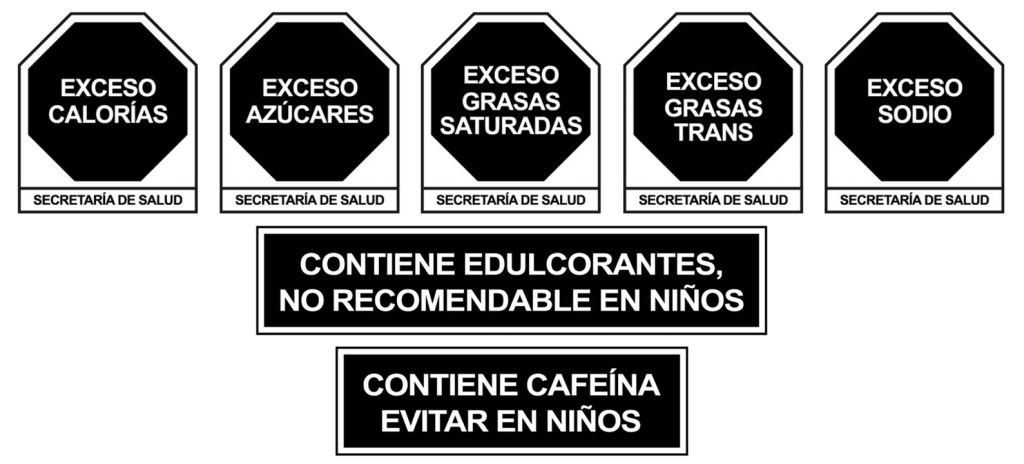
A new study has found promising evidence that Mexico’s front-of-package labeling policy is changing diets. Following implementation in 2020 of a mandatory policy requiring warning labels on the front of food and beverage packages if they are high in energy density, sugar, saturated fat, trans fat, or sodium (or contain any amount of added caffeine or non-sugar sweeteners), this study found significant sales-related reductions in:
- Total calories (-15%),
- Added sugars (-25%),
- Saturated fat (-12%), and
- Sodium (-7%)
for all packaged food and non-alcoholic beverage categoriess combined. Overall, these changes corresponded with a decrease in ≈65 calories purchased per capita per day. Models also suggested an increase in fiber sales (≥5%) in packaged foods and beverages.
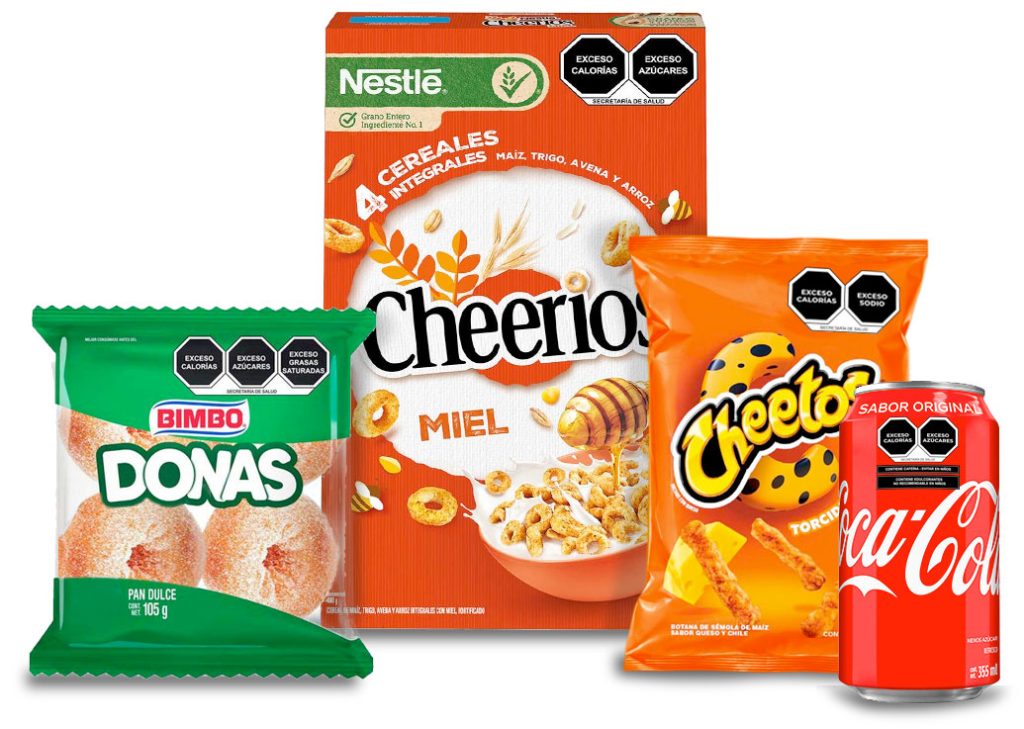
To evaluate this policy, researchers from Mexico’s Center for Nutrition and Health Research at the National Institute of Public Health (CINyS at INSP); Ministry of Science, Humanities, Technology, and Innovation; and the University of North Carolina at Chapel Hill used data from Monthly Manufacturing Industry Surveys (EMIM) to track the production and sales of new goods. Foods and beverages subject to the labeling policy and with available nutritional information were included and divided into seven categories: sweetened beverages, candies, salty snacks, cereal-based desserts, bread, dairy products, and sauces and canned tuna. Overall, the categories covered more than 90% of packaged foods and beverages subject to labeling in Mexico.
To capture any product reformulation that may have occurred over time, they matched sales data for each product with nutritional information during three policy periods: January 2017 to March 2020 (pre-policy announcement), April 2020 to September 2020 (post-announcement and pre-implementation), and October 2020 to December 2022 (post-implementation). Using these data, researchers examined changes in per-capita sales volume of packaged foods and beverages and their equivalent in calories and health-harming nutrients.
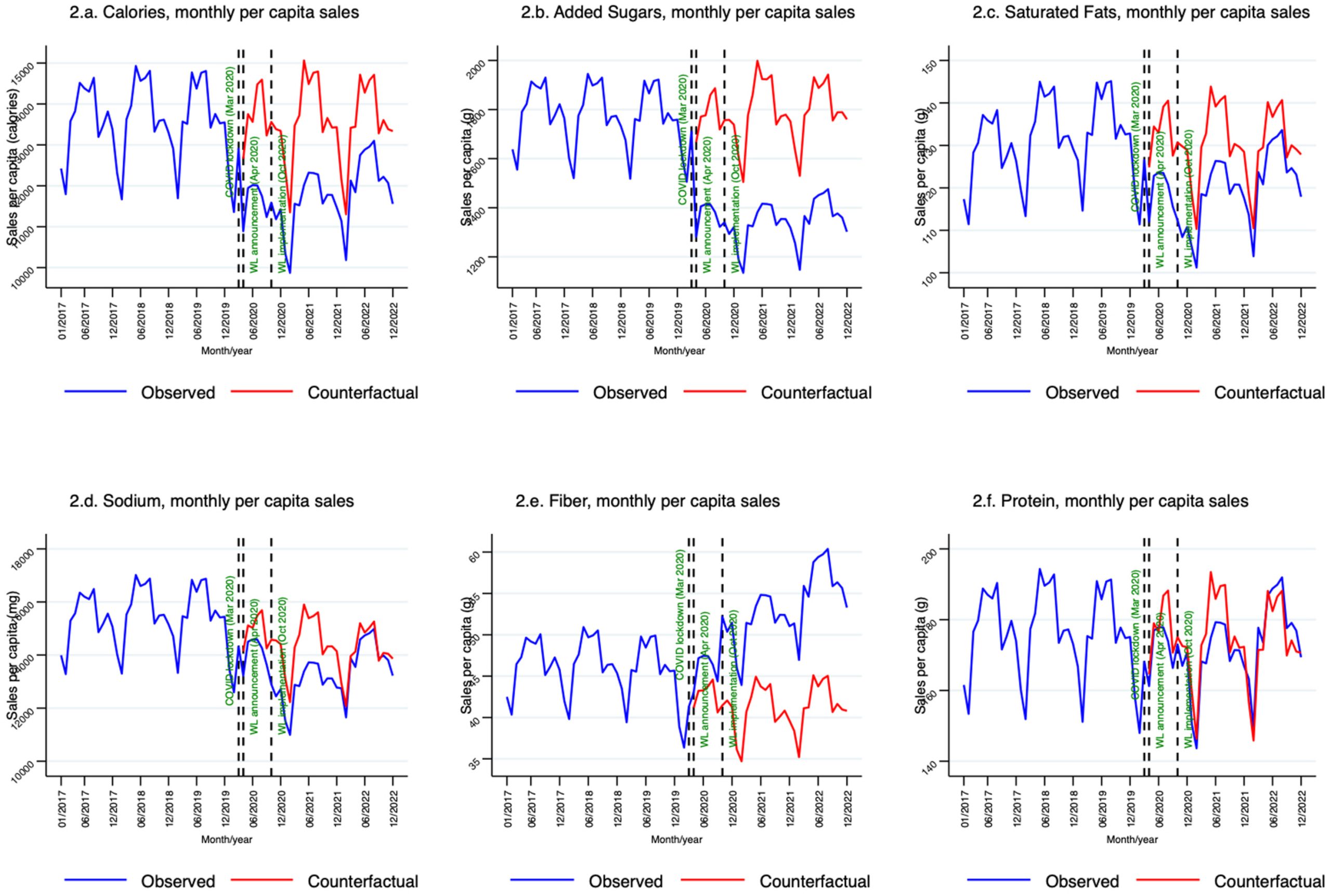
They found significant decreases in nutrients of health concern (added sugars, saturated fats, and sodium) and calories purchased, compared to what would have been expected had the policy not been in place and sales had continued following pre-policy trends. This shift in the nutritional profile of purchases can be attributed to both changes in consumers’ shopping behavior and to companies reformulating their products to avoid the requirement of a front-of-package warning label.

“In this kind of food policy evaluation, it is key to assess the potential population-level implications of the food industry’s response to a mandatory front-of-package label, particularly in terms of product reformulation,” said study co-author, INSP researcher, and Global Food Research Program alum Juan Carlos Salgado. “We estimate this reformulation contributes to around 90% of the total calorie reductions we observed.”
This study is the first to evaluate the magnitude of front-of-package labeling-related sales changes for packaged food and beverages in Mexico and adds to the growing evidence base that front-of-package warning labels are an effective policy tool to both encourages consumers to buy fewer unhealthy products and compel companies to decrease targeted nutrients in the food supply.
This research was supported by Mexico’s Ministry of Science, Humanities, Technology and Innovation and Bloomberg Philanthropies. The funders had no role in study design, data collection and analysis, decision to publish, or preparation of the manuscript.
AUTHORS
Adriana Garduño-Alanis
Juan Carlos Salgado
Alejandra Contreras-Manzano
Tania Aburto
Luis Moreno-Aguilar
Shuwen Ng
Simón Barquera
Read the full study in Social Science & Medicine
/https%3A%2F%2Ffilelist.tudelft.nl%2FTBM%2FPWE%2FNews%2FSocialScienceMedicine.png%3Fhash%3D78b842604f)
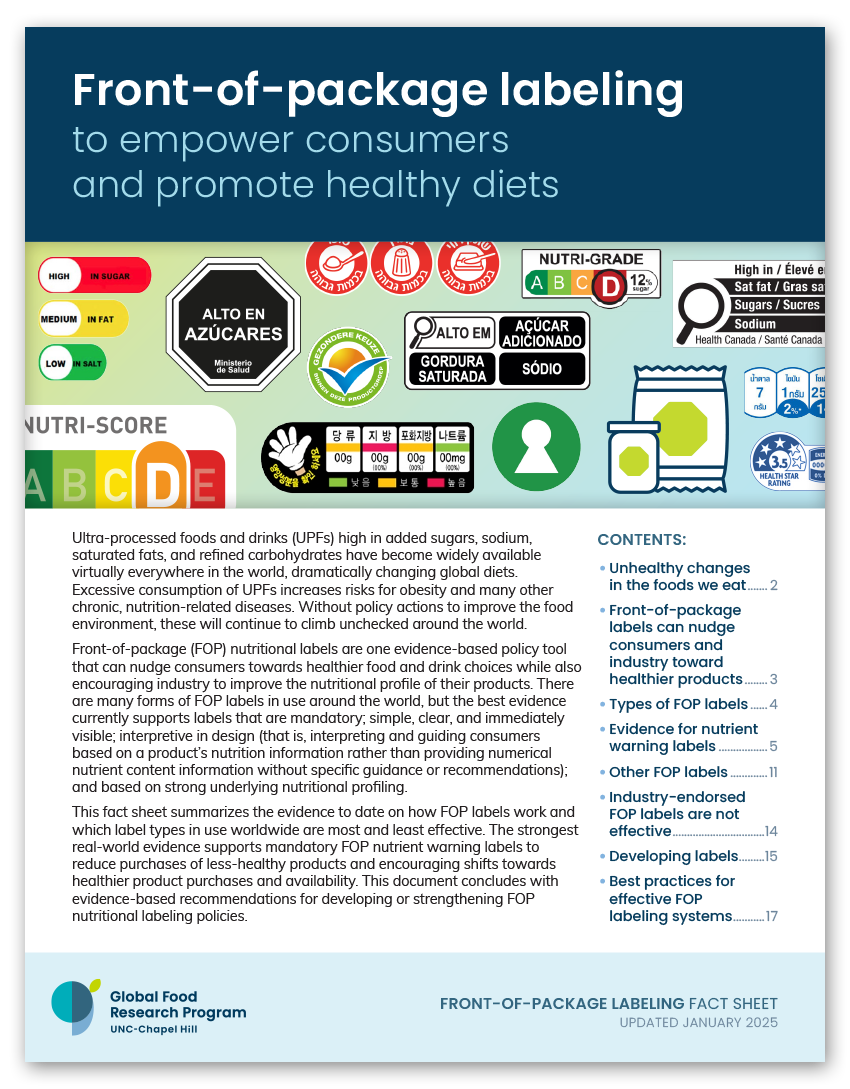
Learn more about front-of-package labeling in our policy fact sheet.