The American Journal of Public Health (AJPH) has published a special issue focused on ultra-processed foods (UPFs), bringing together leading researchers from across disciplines to examine their impacts on health, the food system, and public policy. The collection features original research, editorials, and policy analyses that reflect growing scientific and public interest in understanding the role of UPFs in the U.S. diet and opportunities for action to address their harms.
A growing evidence base on UPFs
The special issue explores a wide range of topics, including:
- Links between UPF consumption and chronic disease, cognitive impairment, and diet quality;
- Public attitudes toward government action on UPFs;
- The food industry’s role in shaping dietary patterns; and
- Major tobacco companies’ role in expanding UPF brands in the United States, drawing parallels between tactics used by the tobacco and food industries to influence products, marketing, and public perception.
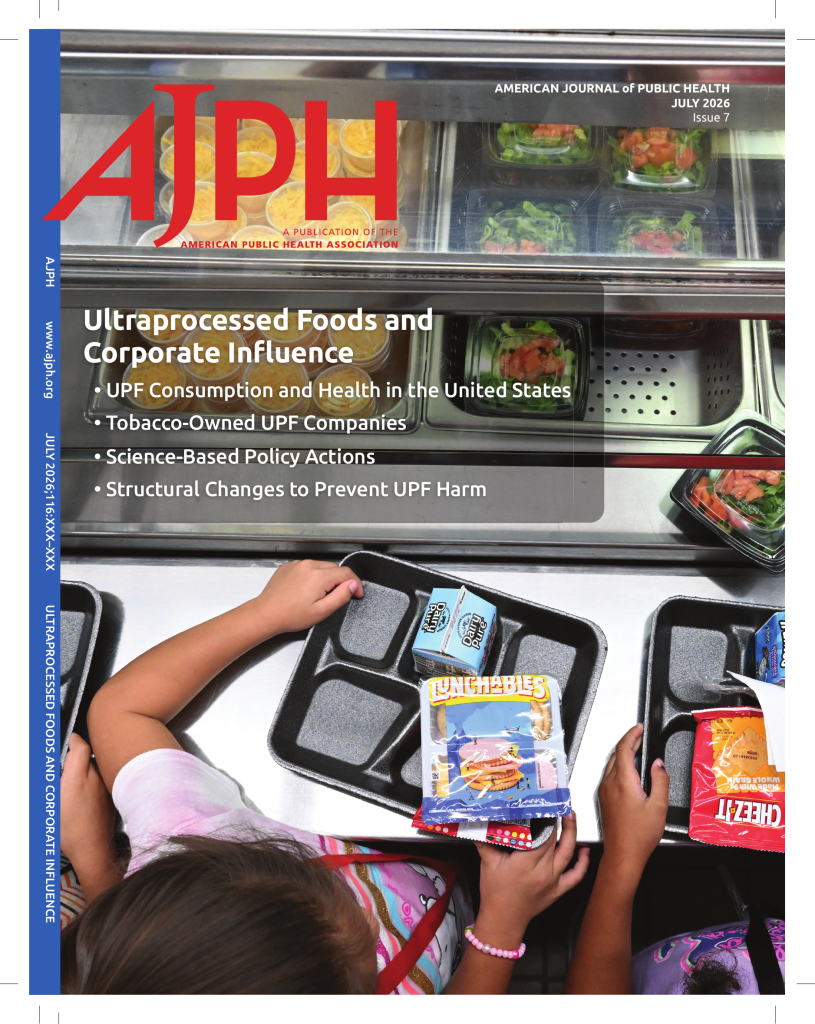
In addition to documenting the health impacts associated with UPFs, the collection includes analyses of potential policy responses. Authors explore topics ranging from food environment policies and dietary guidance to litigation strategies, regulatory approaches, and equity considerations. Together, the papers highlight the growing body of evidence informing efforts to address the health, environmental, and societal impacts of UPFs.
Research informing action
Barry Popkin, W.R. Kenan Jr. Distinguished Professor of nutrition at the UNC Gillings Global School of Public Health and founder of the Global Food Research Program at UNC-Chapel Hill (GFRP), and Lindsey Smith Taillie, GFRP co-director and professor and Associate Chair of Academics for the Department of Nutrition at Gillings School of Global Public Health, are authors on three papers included in the issue:

Popkin is senior author of “What Do NOVA and the Ultraprocessed Food Concept Offer to Policymakers? From Updating Dietary Guidance to Regulatory Action and Advancing Sustainable Food System Transitions.” The paper examines how the NOVA food classification system and the concept of UPFs can complement existing nutrition policies and help inform dietary guidance, regulatory action, and broader efforts to support healthier and more sustainable food systems.

Taillie is senior author of “Operationally Defining and Targeting Ultraprocessed Foods: Insights from US Policy Proposals” with co-authors including GFRP researchers Aline D’Angelo Campos, Carmen Prestemon, and Bridget Hollingsworth. The paper reviews recent federal and state policy proposals related to UPFs and assesses how these products are currently being defined and targeted within U.S. policymaking. The findings provide insight into the challenges and opportunities facing policymakers as interest in regulating UPFs continues to grow.
Taillie is also the first author of “Beyond the Body: The Ultraprocessed Food Industry’s Environmental Toll.” The editorial expands the conversation beyond health outcomes to examine the environmental consequences associated with the UPF industry, including impacts related to packaging waste and pollution. The paper argues that environmental considerations should play a larger role in discussions about the costs of UPFs and the policies designed to address them.
This special issue comes at a time of increasing attention to UPFs among researchers, policymakers, and the public. As evidence continues to grow, many of the papers in the collection explore how governments and public health institutions can respond to the challenges posed by a food supply increasingly dominated by ultra-processed products.
To mark the release of the issue, AJPH hosted a launch event featuring presentations from researchers whose work appears in the collection. Speakers discussed new findings on UPF consumption, industry influence, public opinion, and policy approaches, while highlighting key themes emerging from the special issue. A recording of the event is available on YouTube.
The full special issue can be accessed through the American Journal of Public Health.
Read the entire feature section at AJPH
Learn more about
ultra-processed foods including trends in intake, associated health risks and
environmental impacts,
and policy approaches to
improve the food supply.