The first evaluation of a pilot community-based food subsidy app published recently in Current Developments in Nutrition found promising results for increasing fruit and vegetable purchases among low-income families shopping at Feria Libres (open markets) in Santiago Chile. Participation in the program, which was piloted among 30 households and 6 vendors, helped families afford fruits and vegetables, improved household dietary quality.
Chile has led the world in implementing regulations to reduce unhealthy food consumption through its Law of Food Labeling and Advertising; however, the country continues to struggle with low consumption of fruits and vegetables and overall dietary quality, with affordability as a significant barrier. Working with stakeholders across the spectrum of public, private, and civil society, researchers from Chile’s Center for Research in Food Environments and Prevention of Nutrition-Related Chronic Diseases (CIAPEC) at the Institute of Nutrition and Food Technology, the Institute of Economics at Pontifical Catholic University of Chile, and the Global Food Research Program at UNC-Chapel Hill developed an app-based food subsidy intervention called Bolsillo Saludable (“healthy pocket”).
Over eight weeks, 30 low-income families received two monthly cash benefits to use towards fruit and vegetable purchases at a Feria Libre in Santiago, Chile. Families received their subsidy of 16,000 Chilean pesos (approximately $17 USD) through a mobile app that they could use to make purchases at participating vendors. Beneficiaries were restricted to using the app only for fruit and vegetable purchases at Ferias Libres. Participating vendors could generate an invoice and receive a payment through the app with a two-day rapid payment system to make the app more appealing for vendors to use.
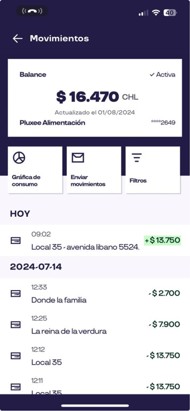

“In many settings, people prefer benefits that can be spent on a wider range of foods, but Bolsillo Saludable participants viewed the restriction as something positive because it helped prioritize healthier choices,” said Jonathan Lara-Arevalo, doctoral candidate with the Global Food Research Program at UNC-Chapel Hill and one of the researchers on the project.
Researchers were interested in how much beneficiaries chose to use the subsidies and how well the program worked for both beneficiaries and vendors. Beneficiaries were asked to evaluate the utility, affordability, quantity and quality of fruit and vegetable purchases during post-implementation surveys. Participating vendors reported their perceived value of program involvement and how easy the platform was to use. Self-reported monthly expenditures on fruit and vegetable purchases at the Feria Libre were recorded both monetarily and by weight in kilograms.
The Bolsillo Saludable program was found to be highly utilized by participating families — all beneficiaries used their benefits, with at least one use per month, and about 98% of the benefit was spent by the end of the pilot, indicating that families used most of their monthly allotment. The program also achieved high satisfaction: Beneficiaries largely reported that Bolsillo Saludable allowed them to afford a greater quantity of fruits and vegetables and that they found the app easy to use. They also reported that Bolsillo Saludable helped change their family habits to consume healthier diets. Vendors also reported that the program was beneficial to their business and that the program was worth participating in. The use of Ferias Libres as the exclusive retail venue for spending benefits aligned with beneficiaries’ pre-existing shopping practices.

“Our findings suggest that healthy food subsidies delivered through traditional food markets can achieve high adoption and acceptability among low-income families and have strong potential to contribute to healthier diets,” said Isabel Pemjean, a postdoctoral researcher at CIAPEC Institute of Nutrition and Food Technology and the study’s lead author, “The success of the pilot highlights the importance of designing policies that fit people’s everyday food practices and build on existing social protection systems and local food environments, offering a promising pathway to improve nutrition while supporting local food systems.”
The success of the Bolsillo Saludable pilot provides a promising example for development of future policies that combine healthy food subsidy programs with support for local food systems. Researchers hope that future iterations of Bolsillo Saludable could expand the range of foods eligible to purchase with subsidies and include nutrition education in the program as a means to further improve dietary quality.
This research was supported by Bloomberg Philanthropies as part of the Food Policy Program.
AUTHORS
Isabel Pemjean
Daniela Montes de Oca
Jonathan Lara-Arevalo
Shu Wen Ng
Lindsey Smith Taillie
Camila Corvalán
Read more in Current Developments in Nutrition
Read more about subsidy and other fiscal policy programs in our new factsheet “Fiscal policies: encouraging production and consumption of healthy, whole and minimally processed foods“
Learn more about GFRP’s work in Chile.