A new study led by researchers at the University of North Carolina at Chapel Hill’s Global Food Research Program (GFRP) found that Peru’s mandatory front-of-package warning label policy was associated with meaningful improvements in the nutritional quality of the country’s packaged food supply. The findings add to growing evidence that mandatory nutrition labeling policies can encourage food manufacturers to reformulate products by reducing nutrients of concern.
Peru implemented the first phase of its front-of-package warning label policy in June 2019. The policy requires packaged foods and beverages that exceed established thresholds for total sugars, sodium, saturated fats, or that contain trans fats to display prominent black warning labels on the front of packages. While the labels are intended to help consumers make healthier choices, they may also encourage manufacturers to improve products to avoid carrying warning labels.
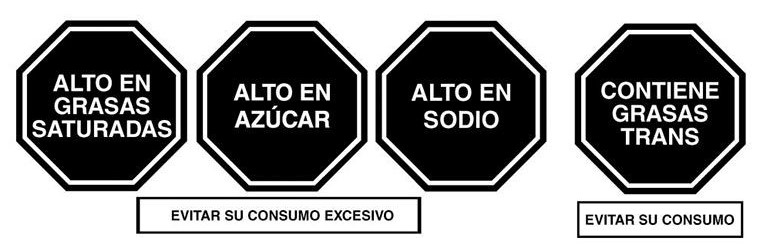
To examine the policy’s impact, researchers collected nutrition information from packaged food and beverage products sold in supermarkets before and after implementation of the policy. They compared the proportion of products that exceeded the policy’s nutrient thresholds and evaluated changes in the amounts of sugars, sodium, and saturated fat across the food supply.
The study found that after implementation of the first phase of the policy:
- The proportion of foods carrying at least one warning label declined from 61% to 55%.
- The proportion of beverages carrying at least one warning label declined from 31% to 19%.
- Products high in sugar decreased by 10% among foods and 37% among beverages.
- Foods high in sodium decreased by 16%.
- Foods high in saturated fats decreased by 7%.
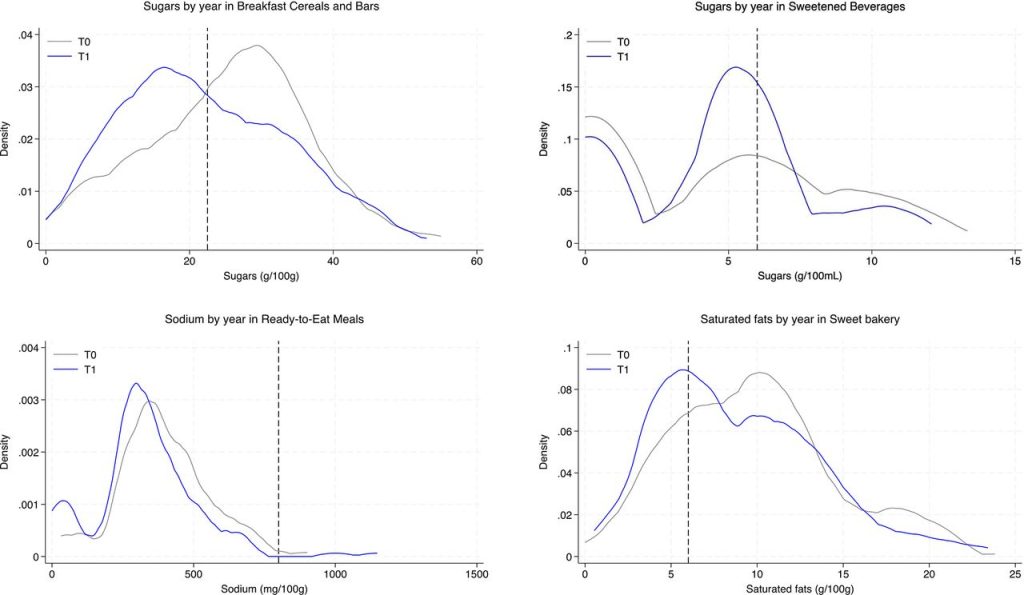
The largest improvements occurred in product categories where manufacturers had the greatest opportunity to reformulate products to fall below the warning label thresholds. Notable reductions were observed among sugar-sweetened beverages, breakfast cereals, sweet bakery products, ready-to-eat meals, and sweet spreads, suggesting that companies modified products in response to the policy rather than simply maintaining existing formulations.
The researchers also conducted a longitudinal analysis of products available both before and after implementation and found similar results, strengthening the evidence that the observed improvements reflected modifications in product composition rather than changes in which products were available for sale.
“By also following products over time, we found that these changes reflected product reformulation rather than simply new products replacing old ones,” said doctoral student Jonathan Lara-Arevalo. “That gives us greater confidence that the policy encouraged manufacturers to improve the nutrient profile of existing products.”

The authors conclude that even modest reductions in the proportion of products requiring warning labels could translate into meaningful population health benefits when implemented across an entire food supply. These findings add to the growing body of evidence that mandatory front-of-package warning labels can encourage product reformulation and improve the nutritional quality of the food supply, consistent with findings from other countries including Chile and Mexico.

“Food companies respond to strong policies. When manufacturers reformulate products and reduce nutrients of concern to avoid warning labels, the result is a healthier food supply for everyone — not just the people who read nutrition labels,” said Lindsey Smith Taillie, GFRP co-director and professor and Associate Chair of Academics for the Department of Nutrition at Gillings School of Global Public Health.
Dr. Smith Taillie is the senior author of the study. Co-authors include Jonathan Lara-Arevalo, GFRP researchers Donna Miles and Bridget Hollingsworth, and collaborators from the Universidad Peruana Cayetano Heredia in Peru and the University of Chile.
This research was supported by Bloomberg Philanthropies as part of the Food Policy Program.
STUDY AUTHORS
Jonathan Lara-Arevalo
Lindsey Smith Taillie
Lorena Saavedra-Garcia
Francisco Diez-Canseco
Natalia Rebolledo
Donna R. Miles
Bridget Hollingsworth
Jaime Miranda
Read more in BMJ Global Health

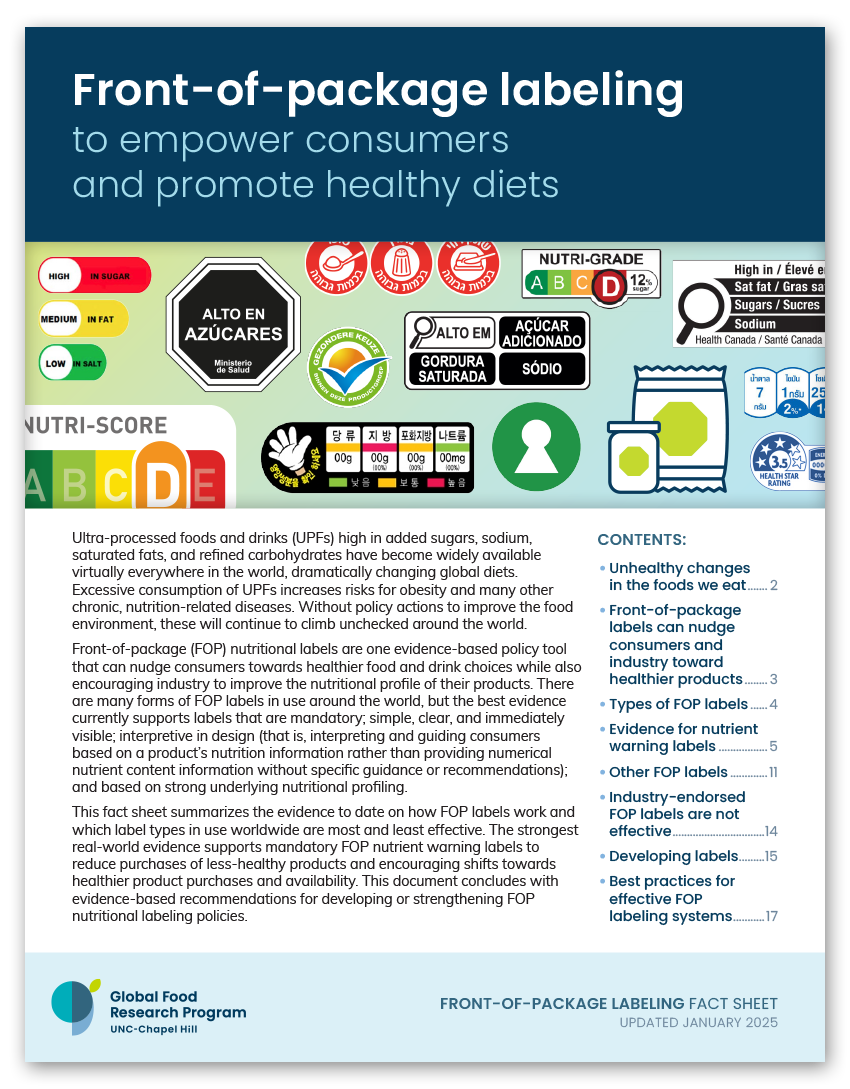
Learn more about front-of-package labeling in our policy fact sheet.
MORE RESEARCH ON FOP LABELS:

Chileans bought less sugar, salt, saturated fat, and calories at the grocery store after trailblazing warning label law, with high compliance from the food industry Read more…

Mexico’s front-of-package warning labels are improving nutrition of food supply and purchases Read more…